
Abstract. Two parallel literatures circulate on longevity: the one from laboratories — slow, full of caveats — and the one from the market, which sells certainties where research offers well-characterised uncertainties. Here I lay out where solid data exist (caloric restriction, sleep, exercise, rapamycin in mice), where there is much marketing with little evidence (peptides, NAD+, premium clinics), and why the promise of an indefinitely upgradable body confuses mechanistic plausibility with biological control. The most dangerous thing is not ignorance: it is certainty.
The longevity industry thrives on a simple promise: that the body, like software, can be upgraded indefinitely. Biology, unfortunately, has other plans.
I have worked with data long enough to know that the most dangerous thing is not ignorance. It is certainty.
Years spent in the lab studying how genetics, epigenetics, and maternal care shape behaviour, stress resilience, and neuropsychiatric vulnerability in animal models teach you one fundamental thing: biological systems cannot be controlled, they have to be negotiated with. You touch one variable and all the others move — often in ways you had not anticipated, sometimes in ways you cannot even measure correctly. Then you step out of the lab, navigate the healthcare system from the other side — as a mother, as a patient, as someone trying to build an overall picture while the system hands you back fragments — and you realise that this complexity does not disappear just because someone has built a two-million-dollar protocol on top of it.
This article is not a defence of the healthcare status quo, which has its own enormous and well-documented failings. It is an invitation to look more honestly at what we actually know — and at what is being sold to us as if we knew it.
1. Serious science, before it became a market
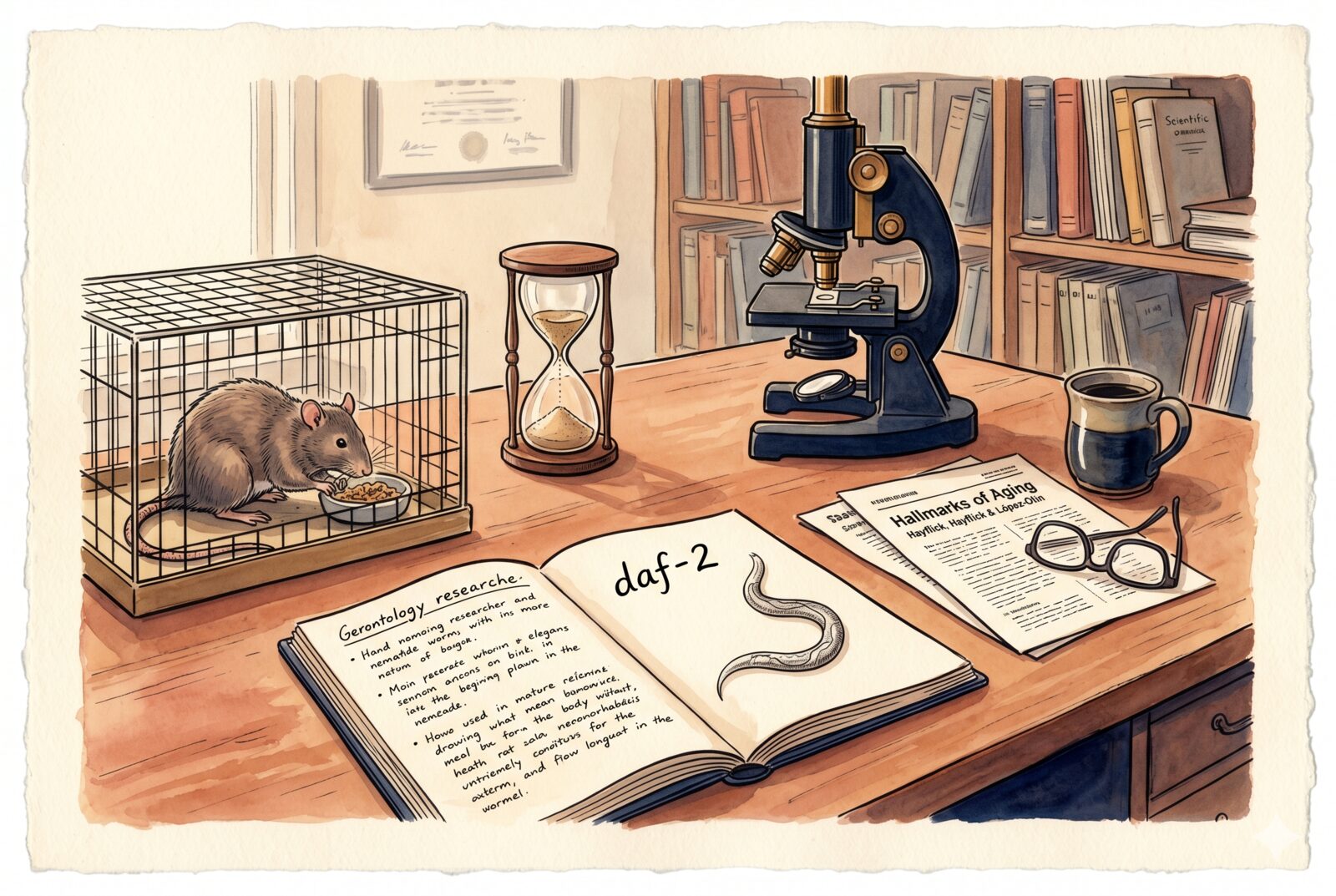
Longevity as a scientific field was not born on Instagram. It was born in the lab, slowly, through experiments no influencer would cite — too uncertain, too unphotogenic, too honest about their own limits.
In 1935, Clive McCay showed that rats on caloric restriction lived significantly longer than controls. The first evidence that ageing was not the immutable biological destiny it had been assumed to be. In 1961, Leonard Hayflick described the cell-division limit that bears his name: somatic cells do not divide indefinitely. There is a biological counter, and when it runs out the cell enters senescence. Robust, replicable, inconvenient.
The 1990s and 2000s brought the big molecular discoveries: telomeres and telomerase (Nobel 2009), the sirtuins identified by Guarente at MIT, the mTOR pathway as a central nutrient sensor. Caenorhabditis elegans — a one-millimetre worm no one would use for a marketing campaign — became the unwitting star of gerontology: single mutations in the daf-2 gene doubled its lifespan.
The real conceptual turning point came in 2013, when Carlos López-Otín and colleagues published “The Hallmarks of Aging” in Cell — nine molecular features of ageing, from DNA damage to mitochondrial dysfunction, from genomic instability to inflammaging. Updated in 2023 to twelve hallmarks, that framework turned ageing from a nebulous process into a mappable biological phenomenon. Modern geroscience was born: the hypothesis that intervening on the molecular causes of ageing could prevent or delay the whole spectrum of chronic diseases.
Serious science. The problem, as always, is not the science. It is what comes next.
2. How a serious scientific field becomes an industry
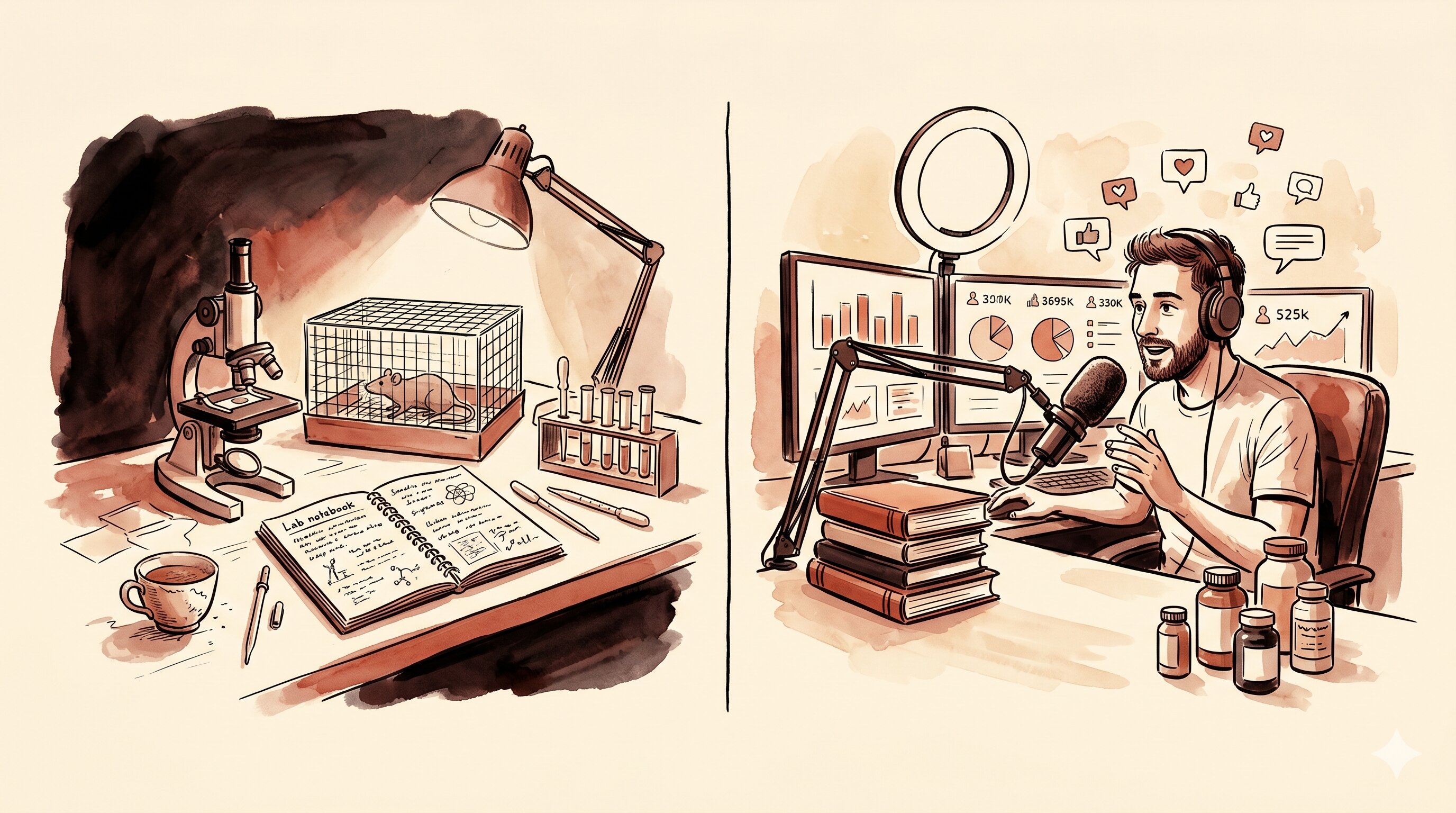
David Sinclair, a Harvard professor, publishes Lifespan: Why We Age — and Why We Don’t Have To in 2019. Global bestseller. Sinclair begins taking public positions on NMN, resveratrol, and metformin before human clinical trials have produced answers solid enough to stand on. The line between researcher and influencer starts to blur. I am not judging him — I am noting it.
Peter Attia — a physician, not a basic researcher, a distinction that matters — builds a content empire: podcasts with tens of millions of listens, a newsletter, a book (Outlive, 2023), a private clinic. Andrew Huberman brings the neuroscience of daily protocols to a huge audience. Within a few years, longevity stops being a scientific-conference topic and becomes gym talk, podcast talk, feed talk.
Why now? Why so fast?
COVID-19 turned health into a matter of emotional survival for millions of people. The growing availability of genetic, microbiome, and epigenetic testing created the illusion that the body is finally readable — hackable, in fact. And then there is the evergreen ingredient: the fear of death, repackaged as a solvable technical problem, always finds a market very willing to listen.
The result is a multi-billion-dollar industry — supplements, wearables, anti-ageing clinics, biofeedback apps — growing at a speed the science it claims to rest on cannot keep up with. A detail that rarely shows up in the launch campaigns.
3. Bryan Johnson, or the two-million-dollar anecdote
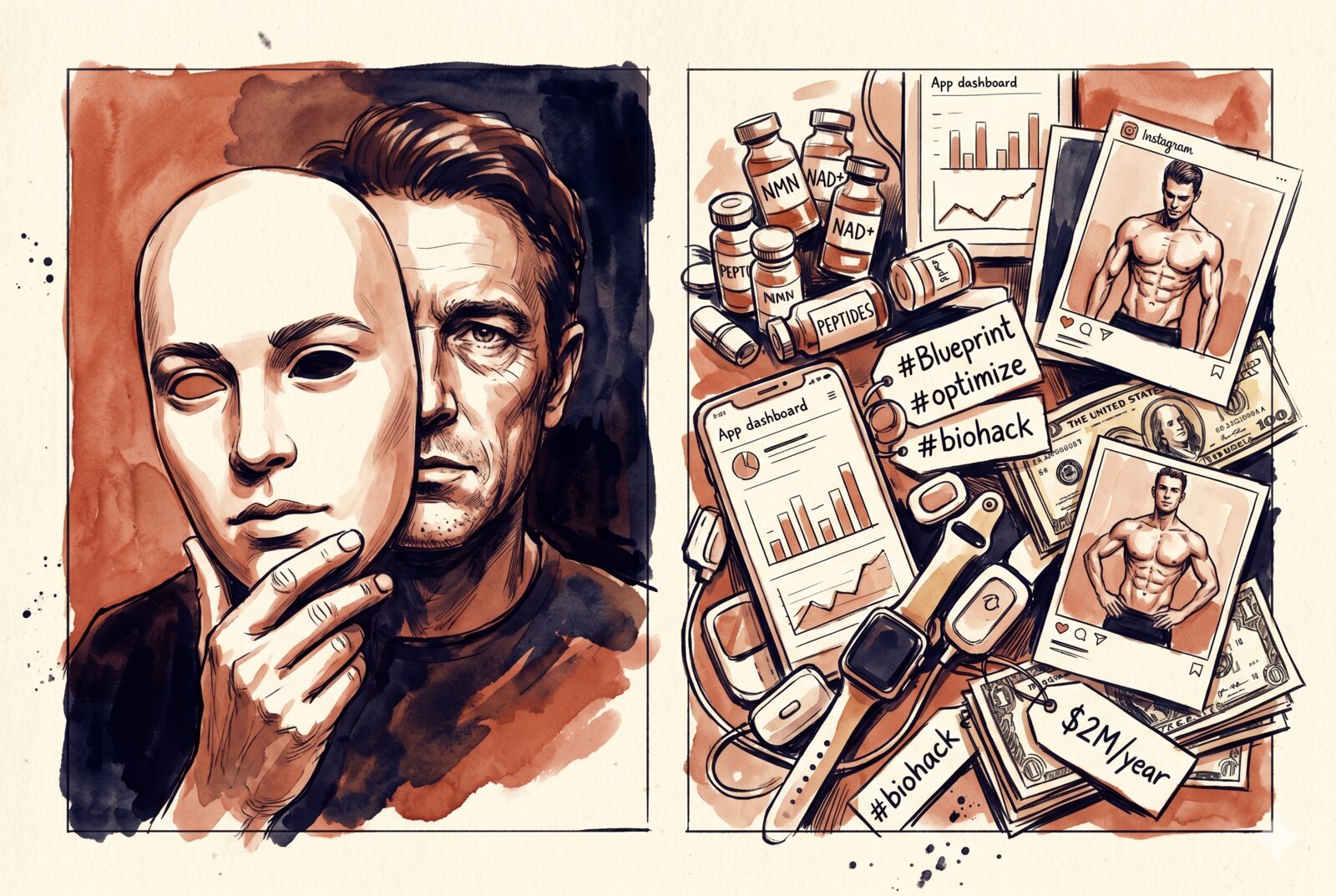
Bryan Johnson spends an estimated two million dollars a year not to age. We do not yet know whether it works. We do know it sells very well.
The project is called Blueprint and is entirely public — shared on social media with impeccable attention to aesthetics, photographs that look like campaigns for a new secular religion of the body. Every organ monitored. Every calorie weighed. Every marker documented. A performance of longevity as an act of identity.
Let us start with the methodological basics. N=1, no control group, no randomisation, no way of isolating the effects of individual variables. In any academic context, this is not a study. It is a well-funded anecdote. The fact that it is presented with the terminology of science does not make it science — it makes it marketing in better clothes.
Then there is the structural and impossible-to-ignore conflict of interest. Johnson sells the protocol, the products, the visibility. His incentive is for the whole thing to work — or at least to convincingly appear to.
And finally: the gap between biomarkers and actual health. That some of his molecular markers look “young” is interesting. Whether this translates into better health or effective longevity is an entirely different question — and no one has the answer today. Not even him.
Johnson is not an impostor in the classical sense. He is something more subtle: the symbol of an era that has turned the body into an entrepreneurial project and biological identity into a brand. Pirandello would have found the material interesting — there is something profoundly theatrical about a man who builds himself a mask of eternal youth and sells it as if it were his real face.
There is something telling in the fact that Johnson wants the body of a thirty-year-old but not — he says so himself — the brain of one. He wants the energy, the bone density, the skin. Not the uncertainty, not the not-yet-knowing-who-you-are. He wants the biology of youth without youth as an existential state. It is a distinction that says everything.
Because today identity runs through the body in a way that has no precedent. The body is no longer the container of the person — it is the person. You show the body, you exist. You optimise the body, you exist better. Investing in the body grants agency in a time when many other forms of agency feel precarious or stripped away. It is understandable. It is not irrational. But it is a cultural response to a fear — and that fear is called disappearance.
Old age is no longer culturally a destination. It is no longer the place of accumulated experience, of memory becoming heritage, of slowness as a form of wisdom. It has become only progressive loss — first speed, then shape, then mind, then presence. First you fade from the screen. Then you fade from the world. This does not sit well with contemporary society. It is not productive, not saleable, not photographable.
Johnson did not invent this fear. He has monetised it with surgical precision. Blueprint is not an anti-ageing protocol. It is an industrial response to the anguish of disappearing — packaged as a technical solution, sold as rationality.
And all of this plays out against a specific cultural backdrop: the radical individualism of contemporary society. In a system where a person’s value is measured by their productivity, visibility, and autonomy, the ageing body becomes a problem to be solved alone. Not a collectively held and culturally transmitted stage of life — a private failure. The paradox is that the more individualistic society becomes, the more public the body becomes. Exposed, performed, optimised in front of an audience. Johnson’s feed is not a diary. It is a declaration of control addressed to millions of people. Agency does not count if it is not seen.
And individualism has a quieter, more pervasive effect: it makes collective solutions hard to imagine. If health is an individual responsibility, investing in an integrated healthcare system becomes less urgent than the next supplement. If ageing badly is a choice, whoever ages badly has chosen. Structure disappears. Only the subject remains — with their stack and their fear.
4. Measuring is not understanding
The longevity industry lives on measurement. Measure everything, often, optimise whatever you find. A principle that sounds scientific — as long as you do not forget that measuring something does not mean understanding it.
Epigenetic clocks — Horvath Clock, GrimAge, DunedinPACE — measure DNA methylation patterns that correlate with biological age and, in some cases, with disease risk and mortality. Serious tools. With serious limitations: they vary across tissues, they are influenced by acute factors such as infection, stress, and sleep quality. And “rejuvenating” an epigenetic clock through an intervention does not necessarily mean you have improved underlying health. The proxy is not the thing. A crucial distinction — systematically ignored the moment there is something to sell us.
Telomeres have become the symbol of biological youth. A shame that the correlation with actual clinical outcomes is, to use a technical term, disappointing. Measurement varies widely between labs, the correlation with concrete health is weak, and artificially lengthening telomeres in animal models has shown, in some contexts, an increased cancer risk. The inconvenient complexity is systematically sacrificed to make room for the sales message.
VO2max, HRV, ApoB, fasting insulin — these have more solid clinical evidence and are modifiable through accessible interventions. But the rule lab work teaches you sooner or later still applies: a marker has meaning inside a system, in relation to other markers, in a specific physiological context. Extracting it from that context and turning it into an isolated target is not applied science. It is superstition with numbers — and superstition with numbers is more dangerous than superstition without, because it masquerades as rationality.
5. Who gets left out — and the events no one wants to name
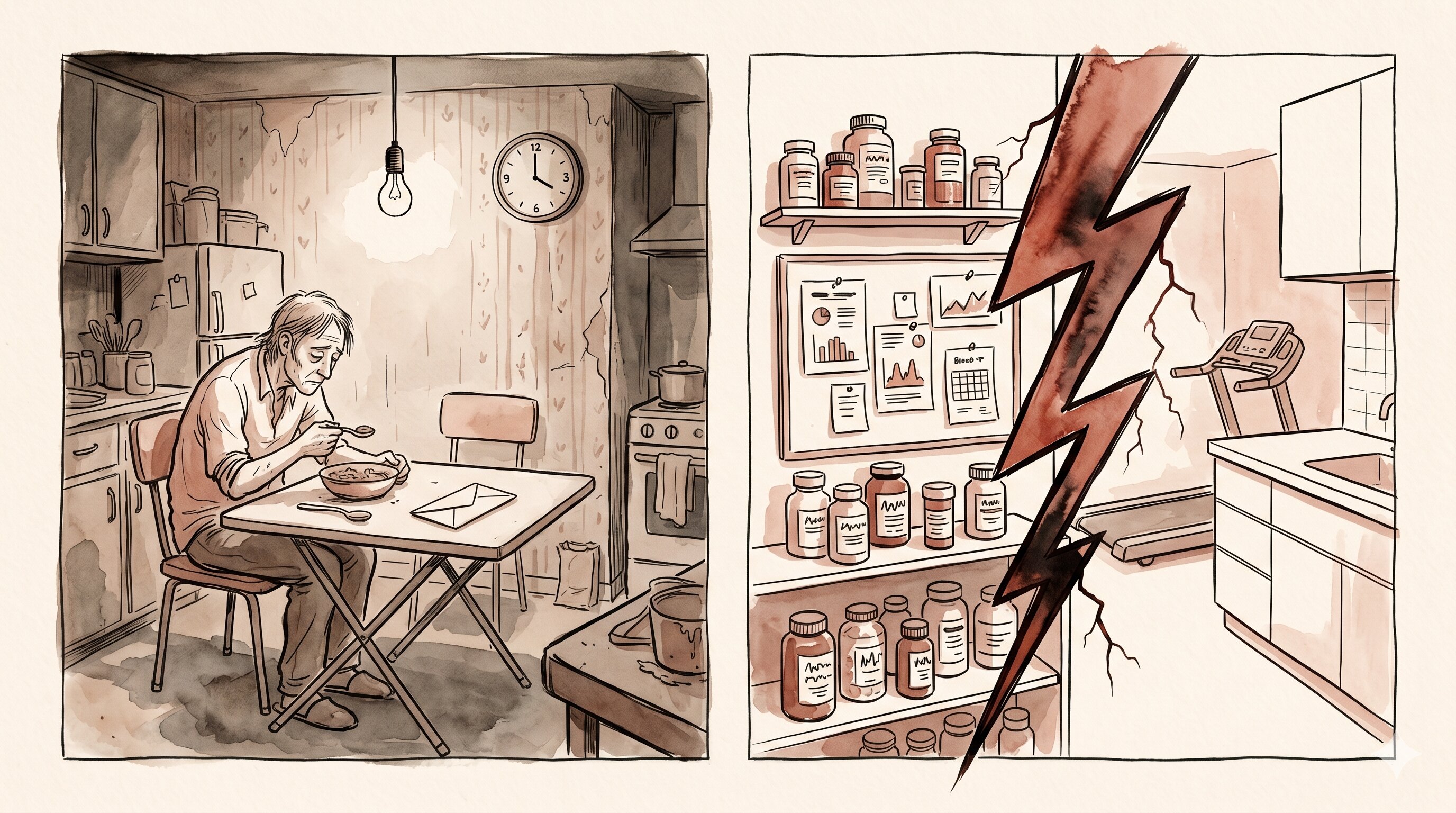
There is something deeply ideological in the way longevity is communicated, and it is worth naming it for what it is.
The industry’s implicit message is simple: if you get sick, it is your fault. You did not sleep enough, you did not supplement the right way, you did not monitor yourself closely enough. It is an elegant lie — and like all elegant lies, it contains just enough truth to be dangerous.
The demographic data tell a different story. The life-expectancy gap between the highest and lowest income quintiles in Western countries is ten to fifteen years. Not because the less well-off make worse choices — but because the most robust determinants of health are almost all structural: stable income, environmental quality, social relationships, exposure to chronic stress, housing security. Outside individual control. Longevity protocols presuppose the leisure to sleep eight hours, the income for in-depth testing, access to doctors willing to listen. They are elite practices sold in the universal language of science.
And then there are the stochastic events — the category the longevity industry prefers not to look in the face. The cancer that arrives without family history. The accident. The de novo mutation. The autoimmune disease that lights up for reasons we still do not fully understand. Biology is probabilistic, not deterministic. No protocol, however sophisticated and expensive and closely monitored, cancels the stochastic noise of being alive.
There is something subtly cruel in the idea that if you get sick it is because you did not optimise enough. It is not only wrong scientifically. It is a narrative that turns biology into blame.
6. When optimising does harm

The problem is not only that many optimisations do not work. It is that some can actively worsen the clinical picture. And this is systematically left out.
Hormones: you optimise the number, you destabilise the system
Hormonal optimisation is one of the pillars of longevity biohacking. Testosterone in the high end of the physiological range. GH for body composition. IGF-1 as a proxy for vitality. All monitored, all documented.
The body, however, is not a system with independent variables. The hormonal axes — HPG, HPA, HPT — are networks of mutual feedback. Raising testosterone exogenously suppresses endogenous production, alters the HPG axis, and can promote the proliferation of androgen-sensitive tissues. Chronically elevated GH and IGF-1 do not “rejuvenate” — they correlate with an increased cancer risk. The most solid case comes from acromegaly: the condition in which the pituitary produces excess GH endogenously. The body is “optimised” for GH exactly as a biohacker would want. Result: cancer mortality two to three times higher than in the general population, with peaks in colon, thyroid, breast, and prostate.
GH is produced by the body itself. It is the elevated level that is the problem, not the source. If elevated endogenous GH produces this, what does monitored elevated exogenous GH do differently? A rhetorical question.
The FDA has added a black box warning to testosterone-based products for cardiovascular risk. Haematocrit is monitored, sure. But subclinical myocardial fibrosis occurs before any blood marker shifts detectably. Studies on bodybuilders show myocardial fibrosis documented on cardiac MRI in asymptomatic subjects with biomarkers in the normal range. Monitoring was in place. It was not deep enough.
And then there is the Women’s Health Initiative — the hardest randomised controlled trial to dismiss. Tens of thousands of women, long follow-up, systematic monitoring. Hormone replacement therapy significantly increased the risk of breast cancer, cardiovascular events, stroke. These were not women left to their own devices. They were monitored. Biology did what it was going to do regardless.
“But with microdoses it’s different”
Here comes the more refined objection: we are not talking about bodybuilder doses, we are talking about physiological microdoses, about bringing values back into the range of a healthy thirty-year-old.
It does not hold up.
The physiological range is defined on populations who produce those hormones endogenously, with circadian variations, pulsatility, active feedback. With exogenous testosterone, even at “physiological” doses, you get a flat profile — without the peaks and troughs the HPG system naturally produces. That pulsatility is not a flaw in the biological system. It is part of the signal.
Suppression of the axis happens anyway. Studies on men treated with low-dose gel show significant reductions in LH and FSH already at sub-physiological doses. The feedback system does not distinguish between endogenous and exogenous: it reads total concentration and responds. With microdoses it just takes a little longer. The harm is not avoided — it is postponed and made more insidious.
Pre-neoplastic cells — which we all have, in variable numbers, over the course of a lifetime — respond to IGF-1 and androgens in a dose-dependent way without a defined safety threshold. The literature on subclinical acromegaly is illuminating: patients with IGF-1 chronically in the high end of the normal range — not pathological — show elevated cancer risk compared to those with IGF-1 in the middle of the range. That is exactly where biohackers want to be.
And duration changes everything. The TRAVERSE trial, the largest ever conducted on testosterone and cardiovascular outcomes, showed non-inferiority to placebo for major events over thirty-three months. Biohackers cite it as proof of safety. But myocardial fibrosis, hormone-sensitive prostate cancer, permanent alterations to the HPG axis — these are outcomes that emerge over ten, fifteen, twenty years. The data do not yet exist. Anyone starting at thirty-five with the intention of continuing for life is running an experiment on themselves whose follow-up is still to be written.
Total-body screening: when looking too hard does harm
At this point the more prepared biohacker plays the final card: I get a total-body MRI every year. If something grows, I see it in time.
Here too, the data do not support the narrative.
Finding something earlier is not the same as curing it earlier. If a tumour already has the biology to metastasise, identifying it six months sooner does not necessarily change the outcome — it changes the moment of diagnosis. This is lead-time bias: apparent survival time lengthens, death does not move.
Total-body MRI in asymptomatic subjects finds incidental findings in 40-80% of cases. The vast majority would never have caused symptoms or death. But once found they enter a system that has to manage them: further tests, biopsies, interventions with real complications. Thyroid cancer is the emblematic case: in South Korea, where thyroid ultrasound screening exploded in the 1990s, diagnosis rates increased fifteenfold. Mortality did not change. Surgery increased enormously, with all the complications that follow.
And then there are the false negatives: some of the most aggressive tumours grow fast and can be invisible even to recent screening. The interval between a negative screen and a diagnosis of aggressive cancer can be months. Not out of negligence. Because the biology of that tumour is faster than the interval between one exam and the next.
The damage that chronic GH, IGF-1, or testosterone cause at the cellular level happens silently, before any blood marker or image can intercept it. When the PSA rises, when the MRI picks up the lesion — the process has been going on for some time. Monitoring photographs the system at the moment of the exam. It does not see what is growing in prostate tissue while it silently changes.
The people who had everything — and got sick anyway
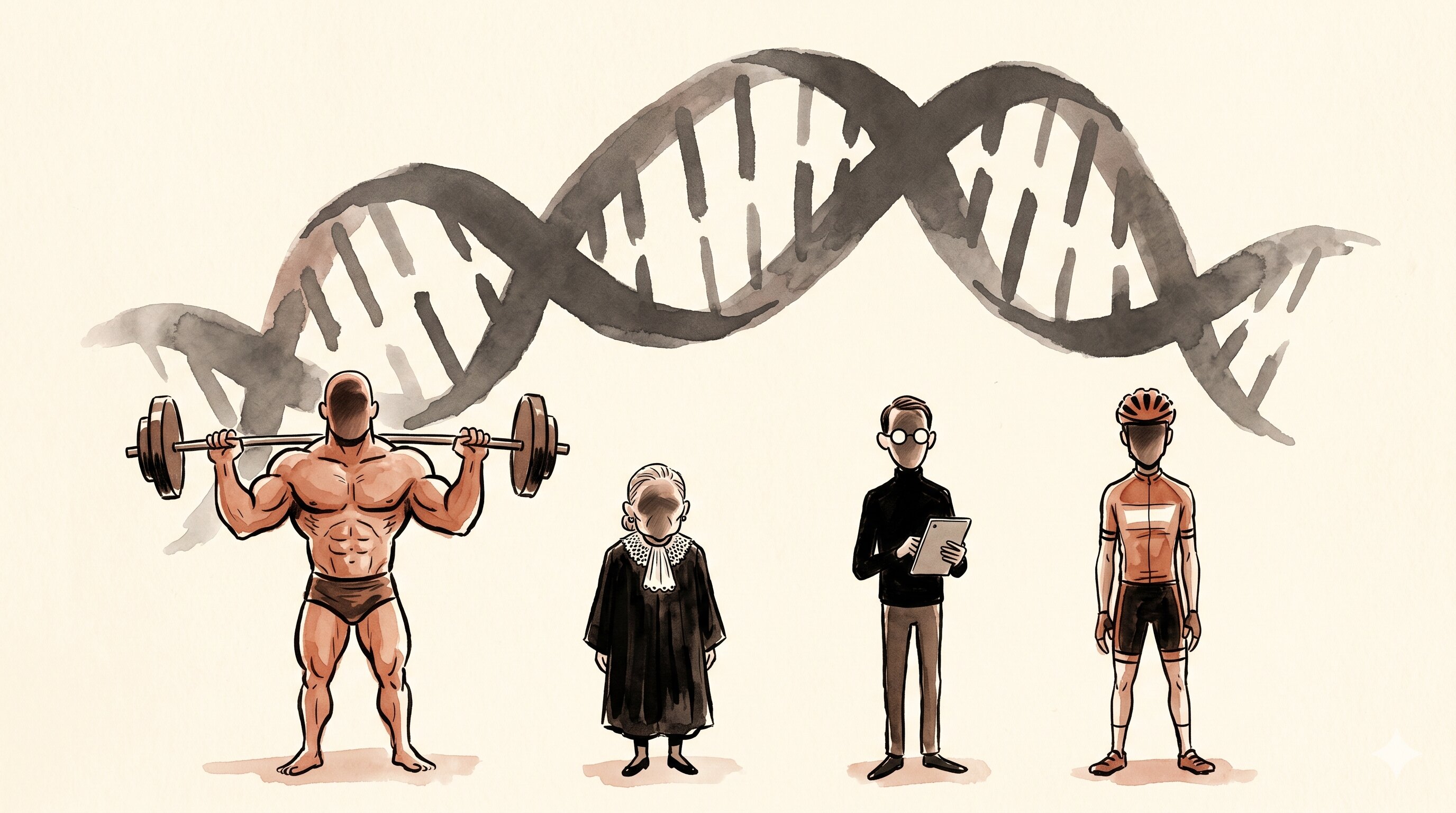
If the scientific pillars were not enough, recent history offers examples that are hard to ignore. People with access to exceptional medical resources, systematically monitored, who got sick anyway.
Arnold Schwarzenegger had access to elite sports medicine for decades. He has himself publicly stated that he used anabolic steroids during his bodybuilding career. Monitoring was there. Result: aortic valve replacement in 1997 and again in 2018, coronary stent in 2020. He speaks openly about the link between cardiac damage and hormonal manipulation. Monitoring detected the problems when they were already structural. It did not prevent them.
The professional cyclists of the 1980s and 1990s — Bert Oosterbosch, Johannes Draaijer, Michel Zanoli, among others — died in their sleep of thrombotic events despite being followed by professional medical staff. EPO raised haematocrit, monitoring checked haematocrit. But the therapeutic window was too individual and too narrow. At night heart rate drops, the more viscous blood slows, and thrombosis occurs in a window no scheduled exam can cover.
Ruth Bader Ginsburg — followed by the country’s best oncologists, with immediate access to any available screening. A personal trainer at eighty. Four independent primary tumours over the course of her life. Stochastic biology did not negotiate.
Steve Jobs is perhaps the most instructive — and most uncomfortable — case. He had access to the best medical resources in the world. When he was diagnosed with a pancreatic neuroendocrine tumour, it was one of the more treatable forms. Jobs delayed surgery by nine months. But the point that matters here goes beyond that choice: even after surgery, a liver transplant, and care at world-class centres of excellence, the disease ran its course. The sharpest paradox: one of the most brilliant minds of his time, convinced he could optimise any system, died in part because he believed he could manage his own biology better than traditional medicine could. The certainty of control can itself be a risk factor.
Peptides: chaotic frontier
A necessary mention of peptides — BPC-157, TB-500, CJC-1295, Ipamorelin, Epithalon, MOTS-c — that circulate online with extraordinary claims. Some have interesting preclinical literature, mainly on murine models and in vitro. The problem is the leap being made between “it works in the mouse under controlled conditions” and “take it every morning to feel better.” That leap crosses an abyss: human pharmacological complexity, individual variability, almost complete absence of controlled clinical trials in humans, lack of long-term safety data. No one knows what BPC-157 does to a human being taking it for five years. Not because someone has studied it and found nothing. Because no one has yet studied it with sufficient rigour.
I have devoted a separate article to peptides — because the topic deserves it and the confusion out there calls for serious analysis.
The final paradox
A chronically alert nervous system does not age well. The irony is that optimisation anxiety is itself an ageing accelerator. Cortisol does not distinguish between a real threat and an HRV you do not like.
7. What works — and why it works now, not just thirty years from now
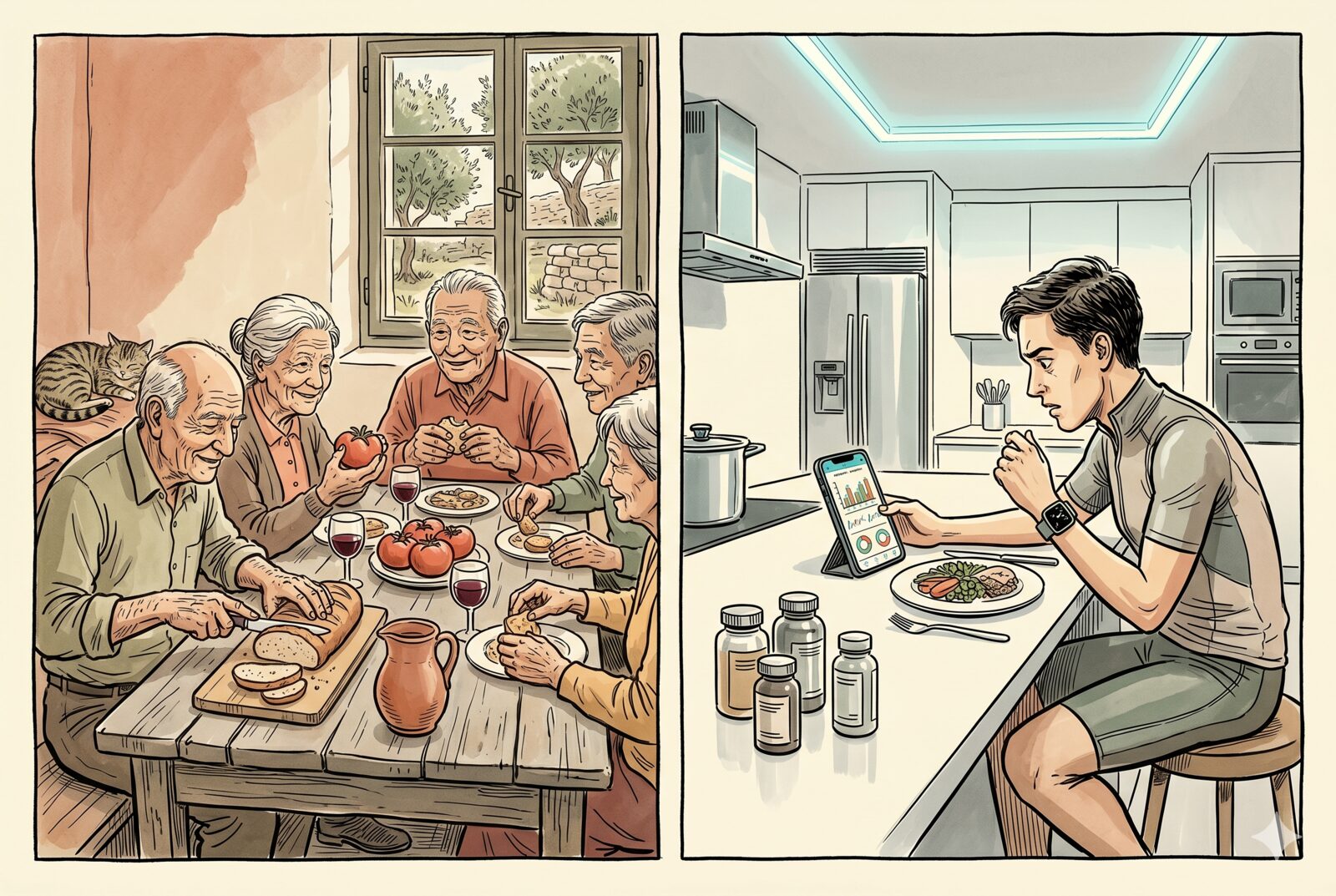
Having said all this, I do not want to fall into the opposite error. There is a solid evidence base on what actually works, and it is strangely unphotogenic.
Physical activity — a combination of resistance and cardio, at an intensity matched to the individual, is probably the single most powerful intervention available. It reduces all-cause mortality, preserves muscle mass and bone density, improves insulin sensitivity, and has documented neuroprotective effects. It does not require a ten-thousand-euro protocol.
Sleep — seven to eight hours of quality sleep have an impact on blood pressure, inflammation, cognitive function, hormonal regulation, and the clearance of brain metabolites. One of the most powerful and most underrated levers.
Social relationships — loneliness kills as much as cigarettes. The data have been there for decades. But it does not sell in packs of 30 capsules, so it can wait.
Not smoking, limiting alcohol, maintaining a healthy weight — not new, not exciting, not saleable as biohacking. With a solidity of evidence most anti-ageing stacks do not even come close to.
What has weak or only preclinical evidence: NMN and NR (insufficient human trials), resveratrol (disappointing human trials compared to murine data), off-label metformin in non-diabetics (interesting, premature), most anti-ageing supplements. This does not mean they are useless. It means we do not know yet.
But what I want to underline — and what the longevity conversation almost always forgets — is that these habits are not only an investment in the future. They pay dividends now.
A single exercise session produces, within hours, an increase in BDNF, an acute reduction in cortisol, and a measurable improvement in mood. Not in twenty years. This afternoon. A night of quality sleep changes cognitive performance and emotional stability the next day in a direct and reversible way. Social relationships reduce cortisol acutely, in real time. A varied diet stabilises energy and enriches the microbiome in weeks — before any epigenetic clock shifts by a year.
None of this guarantees you will not become seriously ill. We have said so with evidence, and we repeat it without ambiguity. But building habits that improve quality of life in the present while reducing modifiable risks in the future is a rational proposition. It is profoundly different from optimising marker upon marker while living in a chronic state of biological vigilance.
The anxiety that does not age well
Spending your life measuring every biological variable in an attempt to control death produces, among other things, chronic cortisol. Which accelerates ageing. Longevity as an anxious project is perhaps the most elegant contradiction of our time.
No blue-zones centenarian has ever opened a biofeedback app. They eat, they move, they belong to someone. Science has been studying them for decades looking for the magic molecule. Perhaps the point is that there isn’t one.
There is something Leopardian in all this — not in the sense of the nihilism you see quoted on walls, but in the sense of lucidity. The body has its own life, its own trajectory, its own capacity to surprise you that cannot be fully negotiated. We can reduce modifiable risks. We cannot eliminate the stochastic noise of being alive. And the obsession with total control — that, yes — consumes the present in a desperate attempt to guarantee a future that is never guaranteed.
Bowie reinvented himself continuously for forty years, changing body, voice, identity every time the system risked crystallising. He never tried to fix an optimal version of himself. When he knew he was dying, he did not try to optimise the time he had left. He chose how to close the curtain — and he did it with Blackstar, released two days before his death: an artistic testament built knowing he would not see the reviews. Not a resistance to the end. A signature. There is something in that trajectory — in choosing the shape of the farewell instead of fighting the decline marker by marker — that the longevity industry does not know and probably never will know how to replicate.
The more honest question is not “how can I live longer?” It is “am I living well enough now to want to continue?”
Conclusion: two failures and a proposal
We are facing two systems that fail in mirror-image ways, and that together leave people without the medicine they deserve.
On one side, market biohacking: excess data, optimisation of isolated variables, interventions without a robust clinical base, accessible only to those who can afford them, built around an ideology of total control that biology contradicts every day. It is not applied science. It is marketing in better clothes.
On the other, the traditional healthcare system in its current form: fragmented by specialty, slow, built to treat organs rather than people. The associative capacity — reading a complex clinical picture, connecting apparently distant symptoms, building the puzzle rather than breaking it into pieces — is rare, not systematic, left to the luck of meeting the right doctor at the right moment. Patients with complex conditions navigate alone through corridors of specialists who do not communicate with each other, collecting reports nobody integrates. The result is a medicine that treats acute emergencies well and manages chronic complexity badly — which is exactly where real longevity plays out.
What is missing is a third way: an integrated, interdisciplinary, multifactorial approach. Not the excess of screening that generates noise and iatrogenic cascades. Not reductionist medicine that treats cholesterol without looking at the person. Rather, a medicine that reads complexity simultaneously — biology, behaviour, clinical history, social determinants — that uses biomarkers as contextual tools rather than absolute targets, and that has the capacity to recognise patterns instead of chasing individual numbers.
And here I come to what may be the most paradoxical point: if this integrated approach became the new healthcare frontier, the first to benefit would be the biohackers themselves. Because they would finally have solid human data, collected on broad and diverse populations, with real decades-long follow-up, instead of extrapolations from murine models and cohorts of one. Investing in a truly integrated healthcare system would make their protocols scientifically grounded for the first time. They would have what they are looking for: the biology of human ageing finally readable in its real context.
We have the data to practise real medicine.
We have chosen to build a market instead.
It is not a mistake. It is a priority.